

Main Navigation
The Kathmandu Valley (once a lake) contains many small villages and towns. Historically, the three most important were: Patan (dating back to the 3rd Century BC), Kathmandu (12th Century), and Bhaktapur (9th Century). The first two are now linked by urban sprawl, with the city’s population rapidly approaching four million.
Kathmandu offers a rich and diverse culture that begs to be explored. Its throbbing streets and narrow lanes are crammed with a fascinating mix of the country’s ~60 ethnic groups. The predominant religion is Hindu and countless shrines dot the city’s streets, as well as larger centres of worship. Buddhism is represented by several important centres. Kathmandu contains seven World Heritage Sites amongst its treasures.
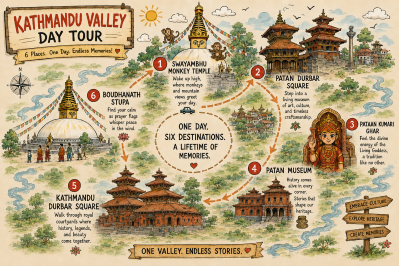
Patan Durbar Square, Kathmandu Durbar Square, Swayambhunath Stupa, Bouddhanath Stupa, Pasupatinath Temple. Patan(or Lalitpur 'City of living art '), Kathmandu and Bhaktpur were all built around royals courts known as Durbar Squares. Each contains wonderful examples of Newari architecture, wood carving and metalwork and all are well worth exploring.
Patan Durbar Square, located 7 killometer south of Thamel (Kathmandu) across the Bagmati River, situated on a plateau in Lalitpur district (385 sq km). This was a village, now is an old city founded by the King Veer Dev in the 3rd century. People used to tell Yupagram, Yala, Lalitpatan and Maningal, these all translate the beautiful city with art.
This is the oldest town in the valley, enlisted World Heritage Site by UNESCO in 1979. There are monuments, including the temple, stupas, courtyard, stone spout and palace museum between 15th to 18th centuries. The ethnic group Newar and their tradition, festival, art and culture are interested in there.Patan Durbar Square offers to visit a beautiful palace square with temple and museum.
Key Highlights of Patan Durbar Square
The city is a popular in the statue making shop, thangka painting, and Tibetan carpet many more.
The Kathmandu Durbar Square, located in 2 killometer south of Thamel known as Hanuman Dhoka Durbar. King Pratap Malla established statue of the Hanuman (monkey god) at main entrance as a protector of the square in 1672. This is the UNESCO heritage site since 1979.
The ancient building and temples were erected from the 12th century to 18th century during the regime of the Malla and Shah King.
Key Highlights of Kathmandu Durbar Square
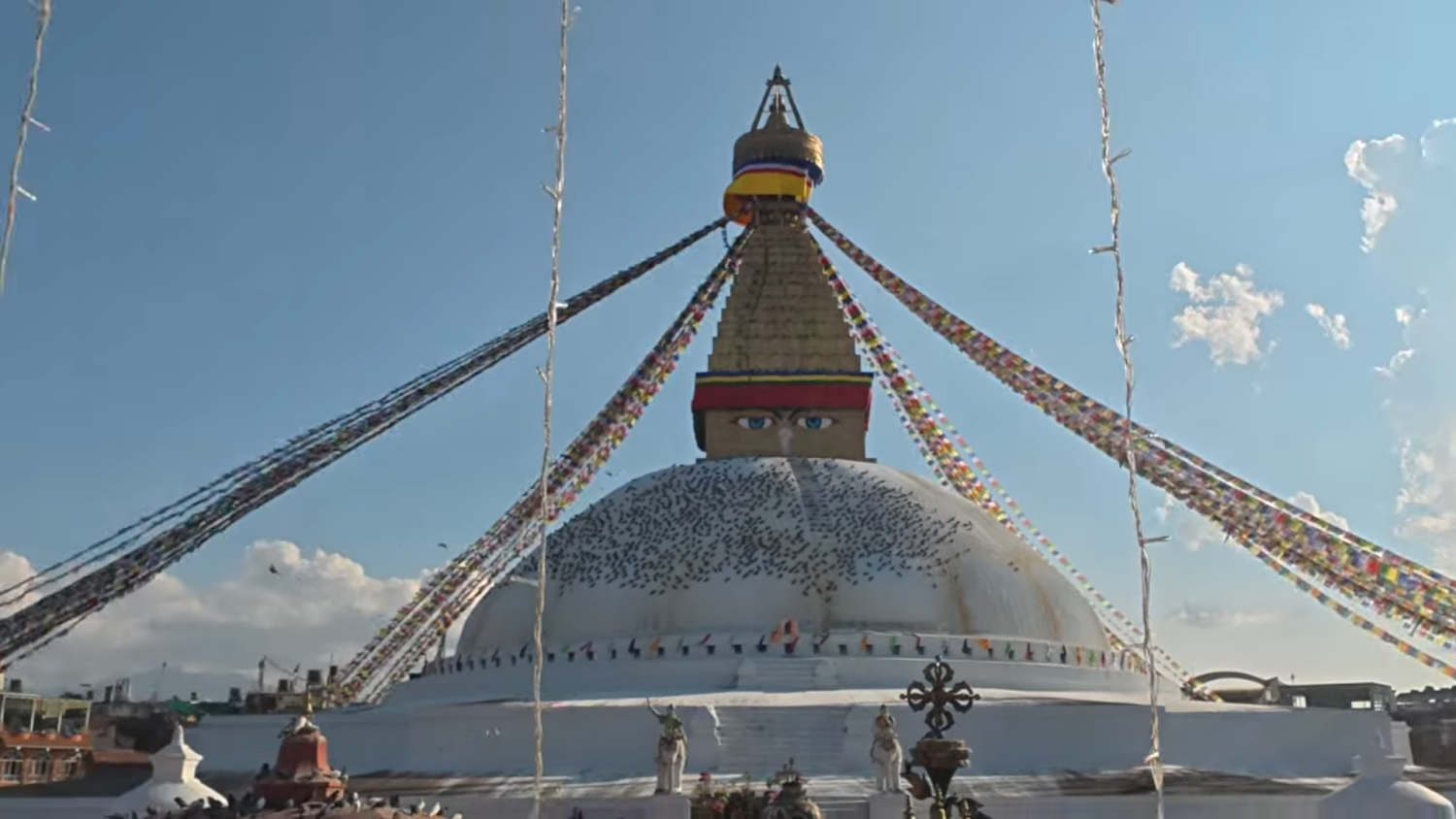
Swayambhunath Stupa (‘the shrine existing by itself’: dedicated to the Mother Goddess Harati) is one of Nepal’s oldest religious sites, dating to ~500 BC and is revered by Buddhists and Hindus alike. Also known as the ‘monkey temple’ it is set on a huge circular base at the top of a forested hill in the western city. Surrounding the stupa is a variety of old Hindu and Buddhist shrines and temples. More recently, a Tibetan monastery, museum and library were added. There are rewarding views over the whole valley. Early morning visits are less crowded.
Bouddhanath Stupa (Centre of Buddhism)
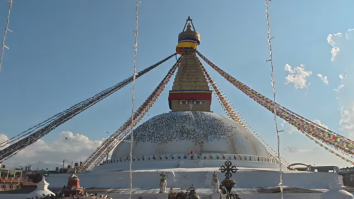
The magnificent Bouddhanath stupa, east of Thamel, is set in a square surrounded by fine architecture. Its huge dome rises impressively from three square plinths with a total height of 36m. It is the centre of Buddhism in Nepal and is surrounded by numerous monasteries including
Pasupatinath Temple is the most important Hindu site in Nepal. It is a large complex situated on the Bagmati River, near the airport: The large complex and funeral pyres are on the western bank and can be viewed from terraced slopes of shrines within the whole complex from across the river.
Starting Time: 09 am (Every Day)
Total Duration: 6 - 8 Hours
We've chosen Landmark Discovery Treks as they gave very good insight on what their trekking includes by email and phone. During our trekking numerous external things were linked with our wellness and enjoyment, but one of the most important ones were the staff members of the Landmark Discovery Treks Prem, Badri and Mahesh. It was great to be able to prepare for the trekking 2 days before with Prem as well as the guide he found for us for the Kathmandu Sightseeing. Once we were in Badri and Mohesh's hand we felt welcomed, helped and so it was great spending 2 weeks with them. We were very pleased with the services they have provided as they followed the itinerary that was sent to us by email, but also managed to individualise our experience by taking in consideration our wishes, preferences, abilities and dietary requirements. I would very sincerely recommend you this company as they do numerous treks and work things out in order to ensure you have a fantastic holiday and joy of fulfilment. If this is your first time to visit the Himalayas prepare yourself as it is very likely you will keep on coming back.:)
szaszkarina91
25th Apr, 2022